

Despite cancelling 18 reactors prior to completion, thus wasting billions of customer dollars, and loading a regulatory filing with 65 cautions of complexities that risk even more failures, Duke Energy in the Carolinas plans the nation’s largest expansion of nuclear reactors by 2050.
NC Governor Josh Stein must use his public voice and authority to challenge this latest climate-wrecking rip-off by one of the world’s worst polluters, and to demand that corporate stockholders must bear the risks of its executive gamblers.
Nuclear is too slow, expensive and failure-prone to help with the climate crisis. The world scientific community says we need a major phase out of fossil fuels by 2030.
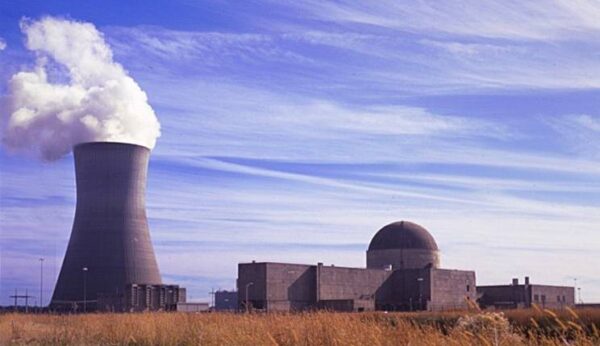
Quick Facts:
Duke Energy proposes to build 11,000 MW of new “advanced” nuclear generation by 2050, far more than any other corporation.
NC regulators are already allowing Duke to charge customers hundreds of millions annually to study whether to build nuclear reactors.
Of the 31 “advanced nuclear” reactors attempted in the U.S. between 2005 and 2024, only 2 were completed; Georgia Power’s Vogtle project was finally finished seven years behind schedule and with a price tag that doubled to $36 billion for the twin reactors, making it “the most expensive power plant ever built on earth.”
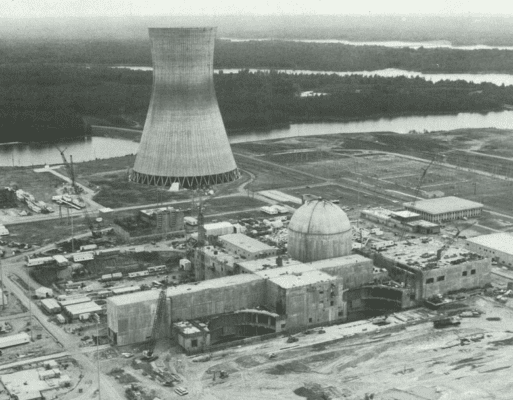
Duke Energy and its subsidiaries cancelled 18 of the nuclear reactors they tried to build between the 1970s and 2017 mid-stream, and another closed years ahead of schedule. The failed projects wasted some $9 billion (in current dollars), soaking monopoly-captive customers with multiple rate hikes for nothing in return.
Duke’s plans to massively expand nuclear and fracked-gas generation are likely to triple power bills in the coming years.
Nuclear power plants produce very large amounts of highly radioactive waste that will be dangerous for thousands of years, and there’s no current disposal solution despite decades of trying to find one.
NC WARN has 40 years of experience opposing the construction of new, dangerous nuclear plants and the contamination of communities from mismanaged radioactive waste.
NC WARN helped lead the charge in stopping the US nuclear “renaissance” from 2005-2017. New reactors that Duke Energy planned at its Shearon Harris plant in Wake County were canceled in May 2013. In August 2017, reactors at Duke’s Lee station in South Carolina and SCE&G’s VC Summer plant in South Carolina were canceled.



Resources
- NC WARN Report: North Carolina Must Not Repeat Georgia’s Nuclear Blunder, April 2026
- Dec. 2025 Letter to Gov. Stein: Risks of Duke Energy's Nuclear Plans
- May 2025 Letter to Gov. Stein: Duke's Many Nuclear Failures
- Nov. 2023 Letter to Gov. Cooper: Duke's Plan for New Nukes Collapses
- NC WARN's Past Successes, Including Past Nuclear Work
Background
Duke is proposing to build both experimental, so-called Small Modular Reactors (SMRs) and larger Advanced Passive 1000s (AP1000s), and it has already named three spots across the Carolinas where it’s developing plans for new reactors: Belews Creek Power Station in Stokes County, NC, William States Lee III Nuclear Station in Cherokee County, SC and the Shearon Harris Nuclear Power Plant in Wake County, NC.
What are “Small” Modular Reactors?
SMRs are water-cooled nuclear reactors that would be configured to total around 350 MW or less per interconnected unit. Duke Energy has applied for an early site permit to begin the development of SMRs at the Belews Creek Power Station. Duke aims to have the first SMR unit operational by 2037, but has no idea which, if any, SMR design will be viable in the future; Duke’s application will contain 6 possible experimental designs. If successful, Duke plans to build multiple additional units at Belews Creek.
“Let’s not be fooled by the word ‘small.’ Even a single SMR is a massive, highly radioactive industrial machine, capable of powering a mid-sized city and containing a radioactive inventory far greater than the bombs dropped on Hiroshima and Nagasaki.” – Arnie Gundersen, engineer with more than 50 years of nuclear power oversight and engineering experience
What are AP1000s?
By 2005, Westinghouse and utilities such as Duke Energy were boasting that the new AP1000 reactor would avoid the huge cost overruns and mid-stream cancellations that plagued the first generations of US nuclear power. That promise – key to the much-hyped “nuclear renaissance” – was largely based on plans for off-site construction of various facility modules that could then be pieced together at each site. That same failed promise is now key to the hype around SMRs.
AP1000s are around 1100 MW, among the typical size of many US nuclear reactors now in operation. Duke Energy is planning to try again to build AP1000s at the sites of previous nuclear failures by attempting to revive licenses for twin units at the William States Lee III Nuclear Station and the Shearon Harris Nuclear Power Plant.
Recent News
Nuclear Plants Could Fail During Heat and Drought — Statement from Executive Director Jim Warren
Statement from Executive Director Jim Warren — Don’t be surprised if Duke Energy soon reduces power generation from its nuclear fleet in the Carolinas as record-breaking drought and heatwaves continue across the region. It’s happened in Europe. It happened in the US South a few years ago. Each of Duke’s …
SEE ALL Nuclear Power POSTSData Center Scandal Grows; NC Governor Must Ban Duke Energy Monopoly from “24/7” Recruiting Used to Justify $63 Billion Expansion — NC WARN News Release
State regulator’s expert calls for data center moratorium after Duke execs’ testimony indicates no other reason for massive buildout of gas-fired and nuclear power plants Watchdog NC WARN today called on Gov. Josh Stein to lead efforts to ban a state-sanctioned monopoly from aggressively recruiting hotly contested data centers – …
SEE ALL Nuclear Power POSTS